Top 10 U.S. Retail Terms Every International CPG Brand Should Know

Entering the U.S. retail market is exciting—but also overwhelming. Beyond the logistics, pricing, and brand positioning, there’s something few international CPG brands are prepared for: the retail lingo.

From “TPR” to “slotting fees,” U.S. buyers, brokers, and distributors use a vocabulary that’s second nature to them—but often confusing for new market entrants. Misunderstand these terms, and you risk missed opportunities, misaligned expectations, or costly mistakes.

This guide breaks down the most commonly used U.S. retail terms that every CPG brand should understand before stepping into meetings, trade shows, or negotiations.

📦 1. Slotting Fee

What it means: A one-time payment to a retailer to secure shelf space for a new product.

Why it matters:
This is common in large chains and can vary by category, store count, and region. Some retailers may waive it if you’re offering strong promotional support or if the product fills a clear gap in the set.

📊 2. Velocity

What it means: The rate at which a product sells, typically measured as units or dollars per store per week (PSPW).

Why it matters:
Velocity is more important than just sales volume. It helps buyers determine if your product is actually performing at the shelf relative to its distribution footprint.

đź’° 3. EDLP (Everyday Low Price)

What it means: A pricing strategy where a product is kept at a consistent low price rather than relying on temporary promotions.

Why it matters:
Some retailers (like Walmart) operate with EDLP expectations. You need to know this to structure your margins and promo calendar accordingly.

🏷️ 4. TPR (Temporary Price Reduction)

What it means: A short-term discount offered to stimulate sales, often funded by the brand.

Why it matters:
Buyers often expect TPRs during initial launch windows. They’re key tools for building early velocity and testing price sensitivity.

đź§ľ 5. Scan Data

What it means: Retailers’ point-of-sale data that shows how many units sold, when, and at what price.

Why it matters:
Scan data is often required by buyers or brokers to evaluate performance. It’s also used to build cases for expansion or new listings.

đź›’ 6. Planogram (POG)

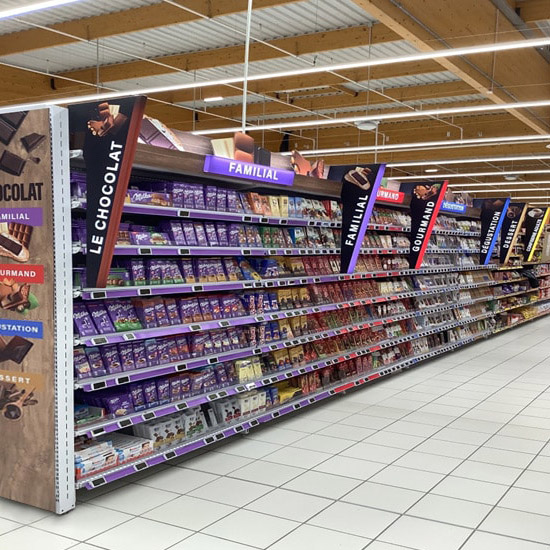
What it means: A visual diagram that shows the exact shelf placement and arrangement of products in a category.

Why it matters:
If you’re not aligned with the planogram—or you get placed in the wrong location—your product’s visibility and sales can suffer dramatically.

đźšš 7. FOB (Free On Board)

What it means: A shipping term that defines who is responsible for goods at the point of transfer (e.g., “FOB Warehouse” means the buyer pays shipping from your warehouse).

Why it matters:
Understanding FOB terms helps you price correctly and avoid confusion about who covers freight costs.

📦 8. Case Pack

What it means: The number of individual units in one wholesale case.

Why it matters:
Retailers and distributors will evaluate your case pack for efficiency, shelf fit, and backroom storage. Incorrect sizing can lead to rejection.

📍 9. Reset

What it means: A scheduled change in shelf layout within a category, often quarterly or seasonally.

Why it matters:
Your listing and planogram position can only be updated during resets. Timing your pitch to coincide with these windows increases your chances.

🤝 10. Trade Spend

What it means: The total investment a brand makes to support its product at retail, including promotions, discounts, slotting, demos, etc.

Why it matters:
Trade spend is a major component of your U.S. launch budget. Underestimating it leads to poor velocity and tension with retail partners.

Conclusion: Speak the Language. Win the Shelf.

Retail in the U.S. moves fast—and no one has time to stop and explain what every acronym means. If you’re entering this space, speaking the language is part of being taken seriously.

At Group MCC, we help international CPG brands not only understand the U.S. market—but operate like locals. From strategy to execution, we guide you through the commercial reality behind every term and expectation, so you enter the shelf with clarity and confidence.

Book a free strategy session today and let’s translate your ambition into action—using a language buyers understand.


Distributor, wholesaler or direct? Choosing the right route to market in the U.S.

Entering the U.S. retail market is not just about having a great product—it’s about choosing the right path to get that product in front of consumers. And for international CPG brands, one of the first (and most misunderstood) decisions is:

Should we go through a distributor, a wholesaler, or sell directly to stores?

Each route has its benefits and limitations, and the wrong choice can lead to operational friction, lost margin, or worse—product that sits in a warehouse with no real movement.

This article breaks down the key differences between distributors, wholesalers, and direct sales, and helps you understand which route aligns best with your brand’s stage, goals, and resources.

1. Distributors: Logistic support, but limited market-building

What they do:
Distributors typically buy your product, store it, and then resell it to retailers or foodservice outlets. They handle logistics, warehousing, invoicing, and delivery.

What they don’t do:
Distributors are not responsible for creating demand or ensuring your product sells. They are not your sales force. If your product doesn’t move, they’ll stop buying it—fast.

âś… Best if:

  • You need a logistics partner with retail access
  • You have existing demand or strong marketing support
  • You’re ready to support the product with activation

đźš« Risk if:

  • You rely solely on them to build your brand
  • You enter without a sell-through strategy
  • Your pricing leaves no room for distributor margin

2. Wholesalers: Gatekeepers to independent chains

What they do:
Wholesalers centralize purchases for independent supermarket chains, convenience stores, or regional banners. Getting “coded” with a wholesaler means their network of stores can order your product easily.

What they don’t do:
Wholesalers do not actively push your product to stores. And stores won’t order just because you’re coded—they order if it sells. That means you need strong retail execution to generate pull.

âś… Best if:

  • You want to scale efficiently across multiple small chains
  • You have a broker or sales team driving store-level orders
  • You’re prepared to invest in merchandising and promotion

đźš« Risk if:

  • You think codification = guaranteed sales
  • You don’t support stores with sell-through strategy
  • You’re not present in-market to ensure performance

3. Direct-to-store: High control, high effort

What it means:
Selling directly to stores—especially independent ones—means your team handles all aspects of the commercial relationship, from pitching to delivery to billing.

This model offers the most control, but it also demands:

  • In-market sales reps or brokers
  • Solid logistics and inventory management
  • Strong relationship-building skills

âś… Best if:

  • You’re launching regionally and want to learn fast
  • You have a lean but agile go-to-market strategy
  • You need proof of velocity to approach larger distributors later

đźš« Risk if:

  • You’re not based in the U.S. or lack local support
  • You can’t manage invoicing, replenishment, or follow-up
  • You scale too fast without operational structure

So… which route should you take?

There’s no universal answer—but there is a framework:

Brand StageSuggested Route
Early-stage / new to U.S.Direct-to-store or small distributor
Regional proof of conceptWholesaler with in-market support
National scalingHybrid: distributor + broker + field team
Operationally strong, niche productDirect or DTC-retail hybrid

The key is not choosing just a route—it’s building the strategy behind it.

Conclusion: Distribution is not strategy. Strategy is how you activate distribution.

Many international brands entering the U.S. fail not because of the wrong product—but because they didn’t understand how retail actually works. They expected movement from codification, or sales from logistics partners, or brand traction without investment.

At Group MCC, we help brands navigate these decisions with precision. Through our MCC Market Ready Framework, we assess your commercial structure, product readiness, and market fit—and help you define the best route to market, supported by the right retail, marketing, and execution strategy.

If you’re evaluating how to get your product on U.S. shelves—and more importantly, how to keep it there—book a free strategy session with our team. Let’s build a route that delivers results, not just distribution.

What CPG Brands Must Know Before Entering U.S. Retail

For international CPG brands, the East Coast of the United States seems like an obvious target—dense populations, high purchasing power, cultural diversity, and a deep appetite for global food and beverage products. But what many brands underestimate is how difficult it is to actually gain—and sustain—traction in this market.

It’s not enough to ship a container.
It’s not enough to get your product listed.
And it’s definitely not enough to expect a broker or distributor to do all the heavy lifting.

The East Coast is one of the most competitive, fast-moving, and high-pressure retail environments in the U.S. If you’re not investing strategically in market activation, your product will sit on shelves—until it’s delisted.

This article outlines the key realities brands need to understand before entering the East Coast market, and what you must be prepared to do to succeed.

1. Codification ≠ Sell-Through

Getting your product coded by a wholesaler is a major step—but it’s just that: a step. Codification means the product is available for purchase by stores—it doesn’t mean it will be stocked, visible, or sold.

In fact, many stores only reorder products if they notice consistent movement. If your product doesn’t sell quickly, they won’t just ignore it—they’ll remove it. And that signal gets sent back to the wholesaler, who may cut your listing entirely.

To prevent this, your brand needs:

  • Velocity-focused marketing campaigns
  • Clear activation plans by retail zone
  • On-the-ground merchandising support

2. Retailers expect support—they’re not going to market for you

Retailers on the East Coast deal with aggressive competition and limited shelf space. They expect brands to come in prepared to drive their own performance.

That means:

  • Promotions aligned with launch windows
  • Geo-targeted digital campaigns around listed stores
  • In-store merchandising and relationship building with store managers
  • Quick resolution of stock, pricing or planogram issues

If you’re not willing to invest in that, don’t expect sustained support from your retail partner. A broker may help open doors—but the brand has to perform to stay in the game.

3. Distributors are not growth engines—they are logistics partners

Distributors and wholesalers help move product—but they are not your marketing team, your merchandisers, or your brand builders. Their role is to:

  • Handle logistics
  • Offer access to retail channels
  • Manage backend relationships

What they don’t do is:

  • Create consumer demand
  • Guarantee reorders
  • Solve for slow-moving SKUs

Expecting your distributor to “get you sales” without brand-side activation is a recipe for frustration on both sides.

4. The East Coast requires in-market resources

If you’re trying to compete from abroad with no local support, you’re setting yourself up for failure. The brands that win here:

  • Have dedicated sales or merchandising teams in-market
  • Build direct relationships with store owners or managers
  • Conduct field visits to ensure compliance, visibility, and execution
  • Run continuous marketing aligned with store geography

The East Coast is not forgiving to absentee brands. If you’re not present—someone else will be.

5. Marketing isn’t optional. It’s survival.

Many brands treat marketing as a luxury—something to consider after the product is on shelf. But in the U.S. market, marketing is the only way to move product at scale.

Without it:

  • Shoppers won’t recognize your brand
  • Store staff won’t prioritize it
  • Retailers will see poor performance metrics

Launching with no demand-building plan is like renting a billboard in the desert—your message is there, but no one sees it.

Conclusion: Enter the market with a plan—or don’t enter at all

Getting on shelf is only 20% of the challenge. The other 80% is keeping your product there through velocity, visibility, and strategic execution.

At Group MCC, we work with international CPG brands to define the right market entry strategy—not just how to get listed, but how to perform in retail environments like the East Coast, where competition is fierce and execution matters.

Through our proprietary MCC Market Ready Framework, we assess your brand’s readiness across product, pricing, positioning, retail integration, and commercial execution. From there, we help you build the go-to-market plan that aligns with your goals, capacity, and budget.

Before you invest in inventory or distribution, let’s talk. Book a free diagnostic session with our team, and let’s make sure you’re not just entering the U.S. market—you’re ready to win in it.